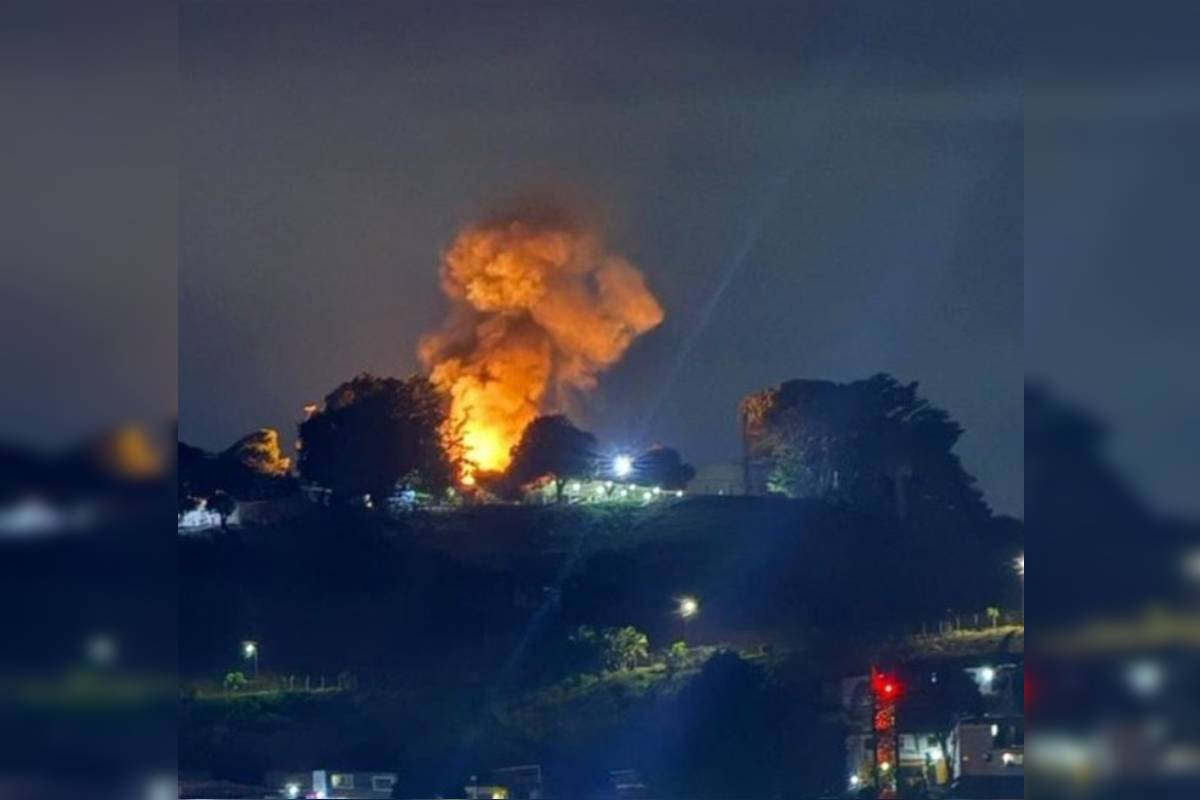
There is a very peculiar meteorological phenomenon in contemporary geopolitics: “humanitarian war” has the curious property of evaporating precisely over the largest deposits of other people’s natural resources. What a remarkable coincidence.
Let’s take Venezuela. A nation holding approximately 300 billion barrels of proven oil – about five times the energy arsenal of the United States itself. A particularly unfortunate geographical and geological detail, let’s say. Because, look, it is precisely in this territory blessed by reserves that suddenly blooms a humanitarian concern so fervent, so urgent, that it demands decapitation with warplanes, seizure of tankers, and, of course, the capture of a President.
All very moral. Very democratic.
The formula is as old as empire, but it works with clockwork precision. First, you manufacture a public enemy: the “vicious dictator,” the “narco-terrorist,” the “threat to the region.” Then, you build a narrative that fits perfectly into thirty seconds of news: “we are here to save the people,” “we are here to fight drugs,” “we are here to restore democracy.” And, very discreetly, you also mention that there is oil, but only in internal reports, in classified memoranda, in those documents that only circulate among intelligence agencies.
Trump, however, lost the traditional elegance. The man opened his mouth and said out loud: “we want our oil back,” “we’re going to take the oil,” “Venezuela took over our energy rights.” As if the oil were a gold watch that a mischievous child had stolen in the schoolyard and now the teacher came to recover it, with the right to corporal punishment.
This is not some opinion blog’s creation. It’s public record. Videos. Presidential statements. The candor of empire, suddenly, unvarnished.
The Monroe Doctrine, Now in “Trump Remix” Version
You know that old maxim from 1823 – “America for the Americans”? Well, it didn’t die. It merely went on hiatus, waiting for the right moment for a comeback tour.
The White House has already made it explicit: it is an update of the Monroe Doctrine for the 21st century, a logical corollary of Trump.
The confiscation, the theft, remain the same! What changed, technically, is only the arsenal. The logic persists: the Western Hemisphere is an American zone of influence, and any government that doesn’t align, that risks partnerships with China, Russia, or Iran, that dares to think of its own resources as its own property: that government needs to be “corrected.” For its own good, naturally.
Put another way: Latin America is, to this day, Washington’s backyard. And a backyard has an owner.
The “Narco-Terrorist of the Week” Industry
There is a recurring character in this state theatrical play: the “narco-terrorist.” It’s an elastic, comfortable label, good for justifying economic blockades as well as authorizing military operations, asset seizures, ship apprehensions, and extrajudicial executions – provided they are televised with due solemnity.
The problem is, while Washington accuses Caracas of drug trafficking, the largest consumer market for illicit drugs remains at home. Thousands of overdose deaths annually. An opioid epidemic that has already cost the U.S. economy about $1.5 trillion, as their own analysts acknowledge.
No one forces an American to get addicted to fentanyl, oxycodone, anything. They are free choices of a free population in a free country. But curiously, when it comes to Caracas or Havana, the narrative changes: suddenly, the blame is on the government, the dictatorship that exports criminals, the drug trafficking industry that conspires against the freedom of nations.
The hypocrisy is so transparent it almost disappears!
Between the Autocrat and the Aircraft Carrier Liberator?
Here lies the central bitterness of it all!
Nicolás Maduro is, in the eyes of reputable international organizations, a leader presiding over a regime with serious problems of authoritarianism, repression, and human rights violations. No one here is singing hymns of praise to Bolivarianism in its current form.
But Trump – or any American president who drops bombs in the name of democracy – is no agent of virtue either.
On the contrary: he is an agent of an imperial tradition that has toppled elected democrats, supported useful dictators, financed military coups, all with the narrative of “protecting the free world.”
The tragedy is that, between the Bolivarian autocrat on one side and the aircraft carrier liberator on the other, the one who bleeds is always the same character: the people, those who don’t run state companies or command barracks, those who die in Caracas either at the hands of the political police or under the blast of a “surgical” bomb.
And these people do not appear in any official statement. They are not cited when talking about “salvation,” not mentioned when listing “collateral damage.” They are pure moral abstraction: the excuse that makes possible all that which, otherwise, would be called by its true name: invasion, theft, recolonization.
What is most disturbing in this whole story isn’t even the wickedness – the wickedness is explicit, it stopped hiding long ago. What is disturbing is the armored certainty that it works. The conviction that the American population – those dying from opioid overdoses in a Detroit apartment, those who lost their retirement in the Stock Market, those who pray not to get sick because healthcare costs an arm and a leg – that this population sees a bomb falling on Caracas and concludes: “well, at least we’re saving democracy over there.”
It’s the most successful political marketing operation of the century: turning internal anger into external aggression, converting domestic frustration into an international moral crusade.
Any chronicler who knew how to see the absurd when no one else did would say something like this: “I caught the news on TV and laughed. Then I cried. Then I laughed again. Because laughing is the only honest response for those who see the empire shouting ‘humanity’ while counting barrels of oil on their fingers.”
The people who don’t appear in the official statement are the main characters of this farce. And as long as they remain invisible in the fine print of geopolitics, they will keep bleeding on both margins: under the boot of the homegrown autocrat or under the wings of the imported liberator.
What a remarkable coincidence, isn’t it?
It’s the rule of the game: behind the language of universal morality (human rights, democracy, the war on drugs), operates an iron logic of power and wealth accumulation.
Venezuela, with its oil, has become the perfect stage for this performance, where the real tragedy of its people is the ignored backdrop for a much older conflict: the dispute over who has the right to own and control the planet’s riches, and who is allowed to tell their own story.
And the Americans are not Americans, they are the same old Europeans speaking uncultured English.
 Flit Paralisante